Date Published: March 18, 2025
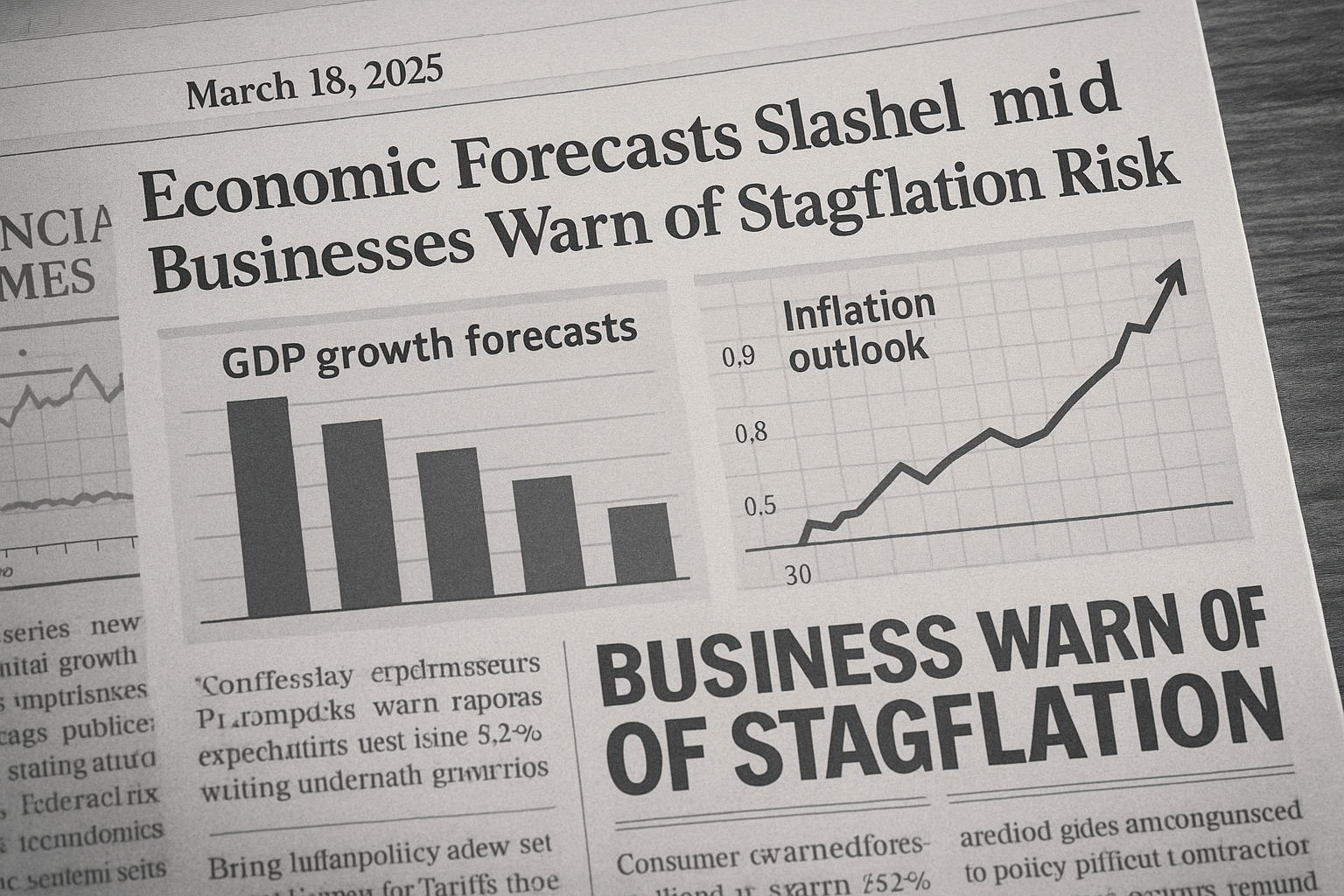
Throughout March, economists and business leaders sharply downgraded expectations for US and global GDP growth in 2025.
Nearly fifty leading analysts, polled by the Financial Times and Chicago Booth, highlighted President Trump’s aggressive trade war strategies—alongside volatile regulatory and spending policies—as key drags on investment, productivity, and sentiment.
Consensus early in the year pointed to US growth of 2.3% in 2025, but by mid-March, forecasts had dropped to just 1.6%.
The OECD echoed these downward revisions, predicting 2.9% growth for G20 economies in 2025 and 2026, with the US facing outsized risk of recession.
Rising inflation became an additional threat: FT-Booth survey respondents saw core personal consumption expenditures price index growing 2.8% year-over-year, up from earlier 2.5% projections, warning of stagflation—a dangerous mix of weak growth and persistent price pressures.
Uncertainty over Trump’s trade, tax, and regulatory regime dampened spending among both consumers and corporations, with sentiment surveys showing accelerated cutbacks.
At the same time, policymakers faced criticism as businesses struggled with erratic data and unclear central bank signaling, making it difficult for the Federal Reserve to calibrate rates.
March also saw geopolitical instability, with US-China and US-Europe talks overshadowed by trade and territorial disputes.
Investors remained uncertain whether upcoming policy meetings in April would clarify the way forward, but both private-sector and official forecasts made clear that March’s risks were set to persist, dampening hopes for a soft landing.